
Blog · Garden style guides
All Seasons Plantings
All seasons garden design.
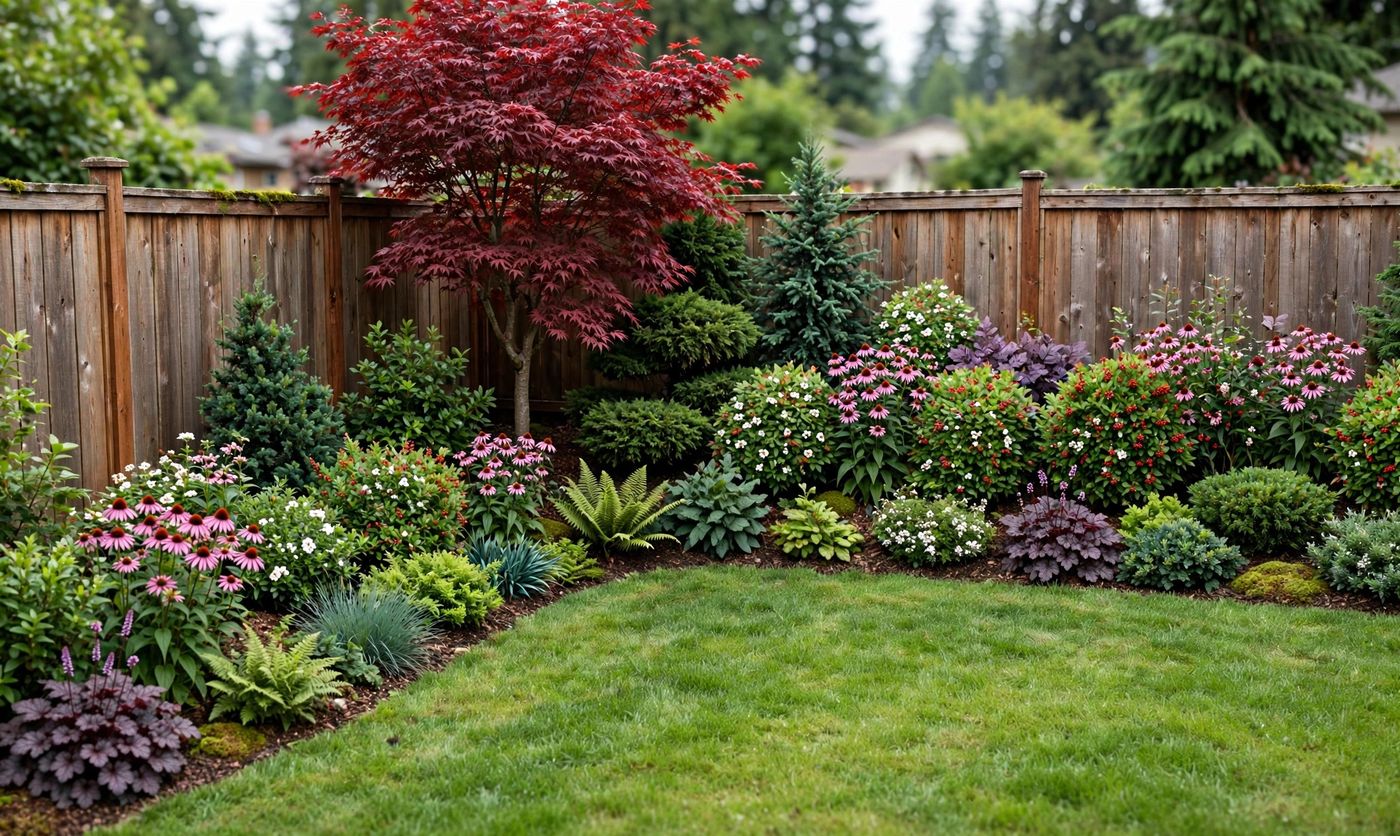
An all-seasons planting is less a style than a discipline: the bed is planned on a calendar, not just a map. Spring bulbs and pieris open the year, summer perennials and hydrangeas carry the middle, fall color and grasses take the autumn shift, and evergreen structure with winter bloomers closes the loop. No month is empty, and no season depends on a single plant — if one performer has an off year, two others cover.
It is the smart default for front yards and any bed you look at daily. The composition is usually a mixed border — part cottage, part evergreen garden — but the mix is deliberate: roughly a third evergreen bones, a third flowering shrubs split across seasons, a third perennials and bulbs filling the gaps.
Design moves that make it work
- Budget by season: list what performs in each month first, then choose plants — never the other way round.
- Hold the evergreen third sacred; it is what keeps the bed a garden in December.
- Give every season a star near the main viewpoint, and let supporting plants fill behind them.
- Include fall on purpose — a vine maple or fall-color shrub is the season most plantings forget.
Plant combinations that work
Individual plants are easy; combinations are the design. Three proven groupings for this style — and how each one sits in the layout:
- The twelve-month bed — Valley Valentine pieris, Gulf Stream heavenly bamboo, Karl Foerster feather reed grass. Pieris bells in spring, bamboo flushing red from summer on, grass standing tawny and architectural through winter.
- The evergreen frame — Coral bark Japanese maple, Winterglow bergenia, Kinnikinnick. Maple leaves spring through fall and coral bark after they drop, bergenia evergreen below, kinnikinnick holding the ground in January.
- The color handoff — Lenten rose, Tall stewartia, Red Bells enkianthus. Hellebores in the cold months, enkianthus bells in spring, stewartia's camellia-like summer flowers and fall fire to close.
Signature plants
From the YardCanvas Pacific Northwest plant library — 37 plants carry the All Seasons Plantings style:
- Arctostaphylos uva-ursi Arctostaphylos uva-ursi
- Carex testacea Carex testacea
- Mahonia repens Mahonia repens
- Arbutus unedo ‘Compacta’ Arbutus unedo
- Mahonia nervosa Mahonia nervosa
- Bergenia cordifolia ‘Winterglow’ Bergenia cordifolia
- Pennisetum alopecuroides ‘Little Bunny’ Pennisetum alopecuroides
- Pennisetum alopecuroides ‘Moudry’ Pennisetum alopecuroides
- Liriope muscari ‘Majestic’ Liriope muscari
- Miscanthus sinensis ‘Little Kitten’ Miscanthus sinensis
Browse the full Plant Library for sizes, sun and water needs.
In the Pacific Northwest
Our long, mild PNW year is ideal for this: twelve months of growth means twelve months of possible interest, and zones 8b–9a support everything from winter camellias to fall-blooming asters. The maintenance rhythm is simple — a spring mulch and tidy, a fall cutback of what is finished.
Maintenance, honestly
No garden is no-maintenance. Here is the real rhythm for this style, season by season:
- Spring: Mulch and tidy; note any month with nothing coming — that's next year's shopping list.
- Summer: Deadhead for rebloom; deep water in dry spells.
- Fall: Cut back only what's finished; leave fall and winter performers standing.
- Winter: One walk-through with a notebook: which week looked empty? Fix it in spring.
Getting the layout right
YardCanvas plans all-seasons beds month by month in the plant schedule, checking the calendar for holes before the first plant is placed — the gap-finding is the design.