
Blog · Garden style guides
Cottage Garden
Cottage garden design for Pacific Northwest yards.
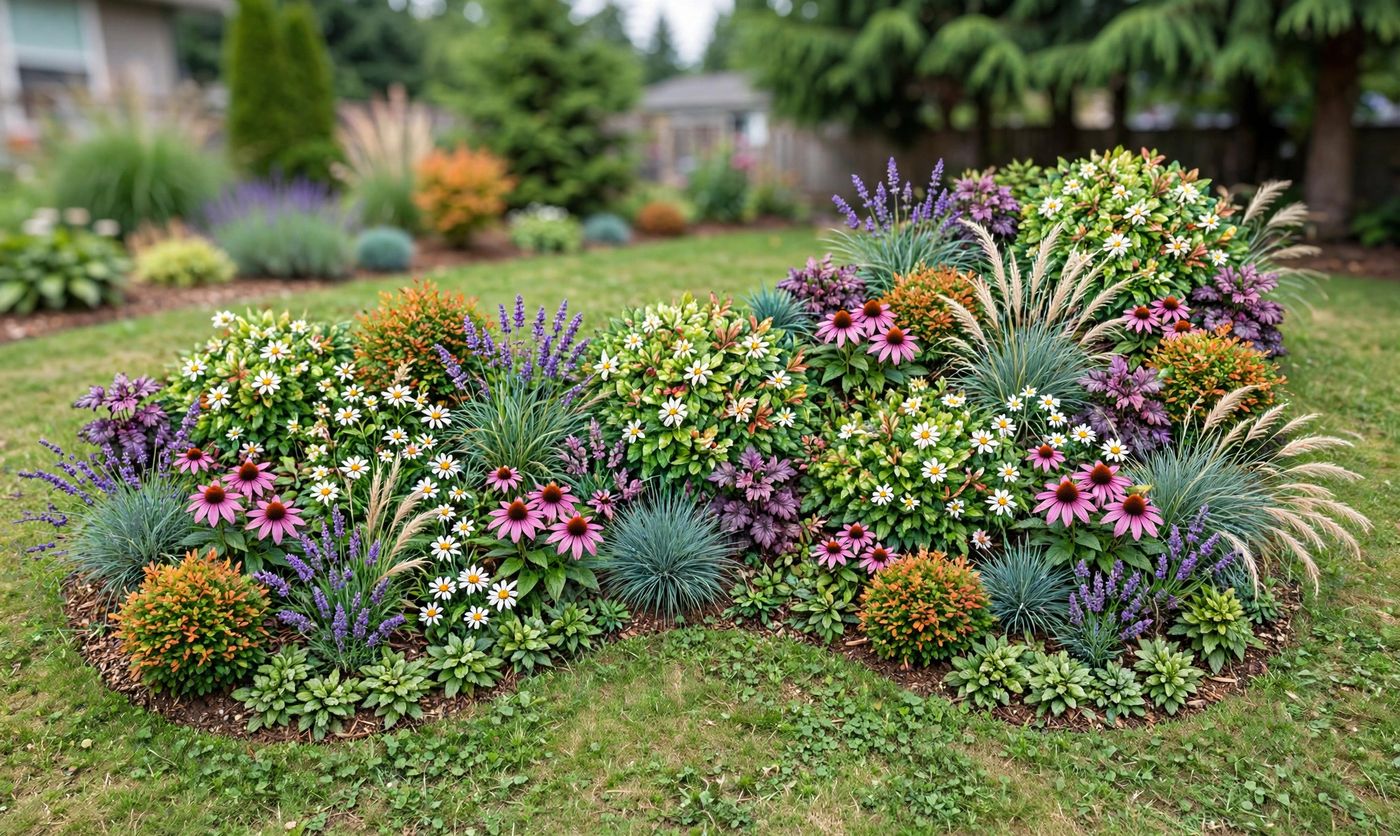
The cottage garden is the romantic of the family — a bed that looks like it spilled happily out of a country garden gate. Nothing stands in rows. Flowering shrubs anchor the back, perennials weave through the middle in drifts, and low bloomers spill over the front edge so the bed melts into the lawn or path. The goal is abundance with a soft hand: color from the first spring bulbs to the last fall asters, and something fragrant every time you walk past.
It is also a forgiving style. Cottage planting tolerates imperfect soil, self-seeds a little in the gaps, and hides a multitude of beginner mistakes under sheer flower power. In the Pacific Northwest it is one of the most reliable ways to get a long bloom season, because our mild, wet springs and dry summers suit the classic cottage palette — lavender, roses, hardy geraniums, coneflower, daylilies — almost perfectly.
Design moves that make it work
- Plant in drifts, not dots — groups of 3, 5 or 7 of one perennial read as a designed wash of color instead of confetti.
- Layer by height: flowering shrubs and a small tree at the back, mid-height perennials in the middle, spillers at the edge.
- Repeat two or three colors through the whole bed; repetition is what makes a loose style look intentional.
- Stagger bloom times — spring bulbs and peonies, early-summer lavender and roses, late-summer coneflower and black-eyed Susan, fall asters to close.
Plant combinations that work
Individual plants are easy; combinations are the design. Three proven groupings for this style — and how each one sits in the layout:
- The classic cottage drift — Lavender, Purple coneflower, Coral bells. Lavender holds the back line, coneflower carries the midsummer middle, coral bells spill over the front edge — one drift, three heights.
- The shrub backbone — Lady Banks rose, Common lilac, Candytuft. Climbing rose and lilac give the bed its spring height and perfume; candytuft runs a white, evergreen edge along the front.
- The spring corner — Bleeding Heart, Hosta, Lungwort. Bleeding heart opens the year in April, lungwort spots the ground blue beneath it, and hostas take over the floor for summer.
Signature plants
From the YardCanvas Pacific Northwest plant library — 35 plants carry the Cottage Garden style:
- Heuchera x ‘Amethyst Mist’ Heuchera x
- Echinacea purpurea Echinacea purpurea
- Lavandula angustifolia ‘Hidcote' Lavandula angustifolia
- Lavandula angustifolia ‘Hidcote’ Lavandula angustifolia
- Lavandula angustifolia ‘Nana' Lavandula angustifolia
- Achillea millefolium ‘Apple Blossom’ Achillea millefolium
- Aquilegia formosa Aquilegia formosa
- Clematis armandii ‘Apple Blossom’ Clematis armandii
- Clematis viticella ‘Wisley’ Clematis viticella
- Delphinium elatum ‘Blue Springs’ Delphinium elatum
Browse the full Plant Library for sizes, sun and water needs.
In the Pacific Northwest
Our winter wet is the one thing to plan around: cottage perennials hate sitting in cold mud, so raise beds slightly or work in compost to open the soil. Mulch in spring, deadhead the repeat bloomers, and most cottage gardens here need almost no summer water once established beyond a deep soak in an August dry spell.
Maintenance, honestly
No garden is no-maintenance. Here is the real rhythm for this style, season by season:
- Spring: Cut back last year's perennials, mulch 2 inches, divide anything overcrowded.
- Summer: Deadhead repeat bloomers every couple of weeks; deep water in dry spells.
- Fall: Leave seed heads for birds; plant spring bulbs into the gaps.
- Winter: Mostly rest — one tidy of collapsed stems on a dry day.
Getting the layout right
Start with the bones — shrubs and the path or edging — then fill in drifts. YardCanvas lays cottage beds out as curved, overlapping drifts on the measured plan, so the counts and spacing come out right instead of guessed.