
Blog · Garden style guides
Drought Tolerant Plants
Drought tolerant garden design for dry PNW summers.
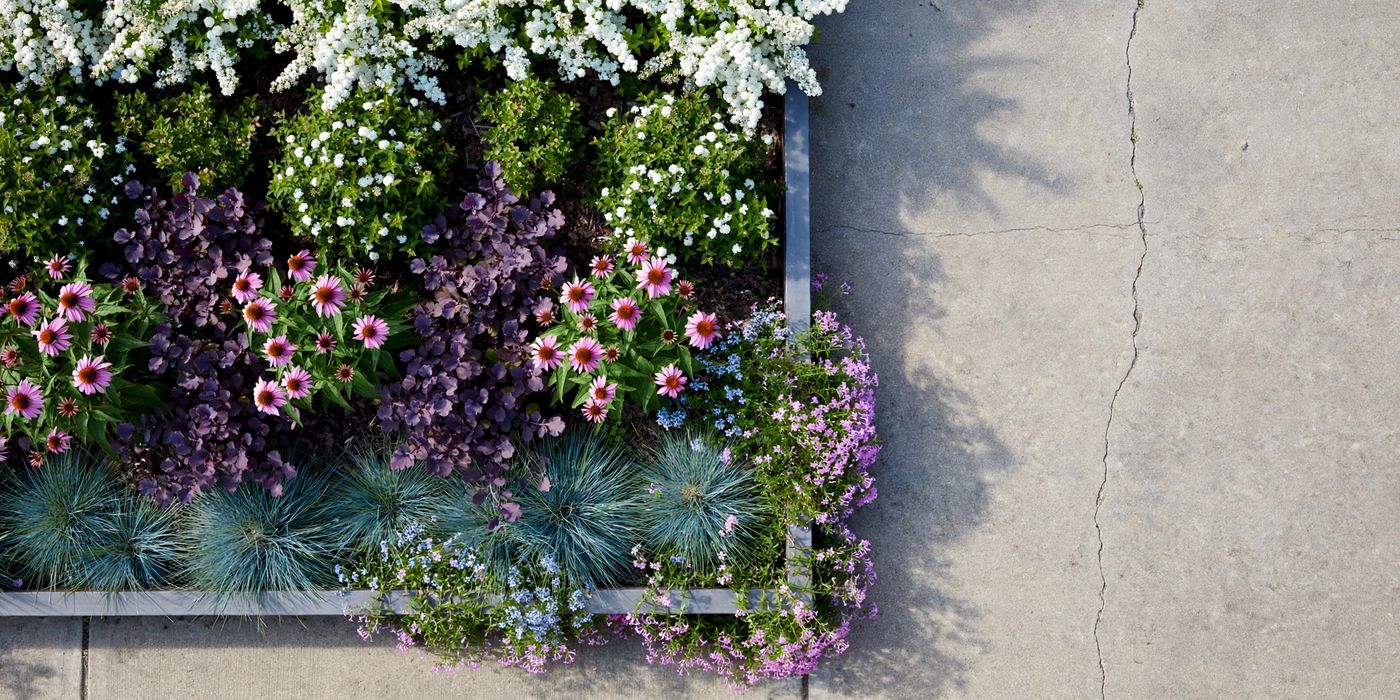
Drought tolerant is a strategy, not a look — though the look it produces, silver foliage and grasses and lavender in the sun, happens to be gorgeous. The strategy: choose plants whose native homes share our dry-summer pattern, establish them properly with water in year one, then let deep roots do what sprinklers used to. The result is a bed that peaks in the exact months the lawn gives up, and asks for a fraction of the water.
People underestimate how dry a Pacific Northwest summer is. From July to mid-September many of our yards see almost no rain, and water restrictions are becoming a regular feature. A drought-tolerant planting is the hedge against both — designed beauty that does not depend on the hose.
Design moves that make it work
- Establish honestly: even drought plants need regular water their first season — drought tolerance is earned in year two.
- Mulch deep (3–4 inches) to bank soil moisture; in the driest beds, gravel mulch out-performs bark.
- Space for air and mature size — dry-garden plants resent crowding and stay healthier lean.
- Put the thirstiest plant you love in a pot by the tap instead of compromising the whole bed.
Plant combinations that work
Individual plants are easy; combinations are the design. Three proven groupings for this style — and how each one sits in the layout:
- The water-miser trio — Hidcote English lavender, Japanese blood grass, Cliff stonecrop. Three of the most reliable dry-summer performers we plant — fragrant, architectural, and nearly hose-free by year two.
- The silver-and-green bed — Hidcote English lavender, Lambs Ears, Lipstick beach strawberry. Cool colors that read as lush even in a dry August, on a fraction of a lawn's water.
- The tough border — Irene rosemary, Hidcote English lavender, Apple Blossom yarrow. Rosemary as the evergreen shrub layer, lavender in front, yarrow feeding bees through the dry months.
Signature plants
From the YardCanvas Pacific Northwest plant library — 25 plants carry the Drought Tolerant Plants style:
- Arctostaphylos uva-ursi Arctostaphylos uva-ursi
- Arbutus unedo ‘Compacta’ Arbutus unedo
- Mahonia nervosa Mahonia nervosa
- Polystichum munitum Polystichum munitum
- Fragaria chiloensis ‘Lipstick’ Fragaria chiloensis
- Symphoricarpos albus Symphoricarpos albus
- Euphorbia characias ‘Humpty Dumpty’ Euphorbia characias
- Holodiscus discolor Holodiscus discolor
- Ribes sanguineum Ribes sanguineum
- Cistus x hybridus Cistus x hybridus
Browse the full Plant Library for sizes, sun and water needs.
In the Pacific Northwest
Zones 8b–9a are lavender country — it grows here like a native — and the same goes for rosemary (against a wall), sedum, blue fescue, yarrow and hardy geraniums. The caution is winter wet again: in heavy clay, amend and raise, or the summer-proof plant rots in January.
Maintenance, honestly
No garden is no-maintenance. Here is the real rhythm for this style, season by season:
- Spring: Cut lavender and grasses back as growth starts; mulch deep, once.
- Summer: Water year-one plants weekly; year-two-plus plants get little to none.
- Fall: Stop watering and let plants harden off; plant new drought beds now.
- Winter: Clear soggy mulch from crowns in heavy clay; otherwise leave it alone.
Getting the layout right
YardCanvas groups the bed by water need on the plan and notes the establishment watering schedule right in the plant list, so 'drought tolerant' survives the first summer.