
Blog · Garden style guides
English / Formal Garden
English and formal garden design.
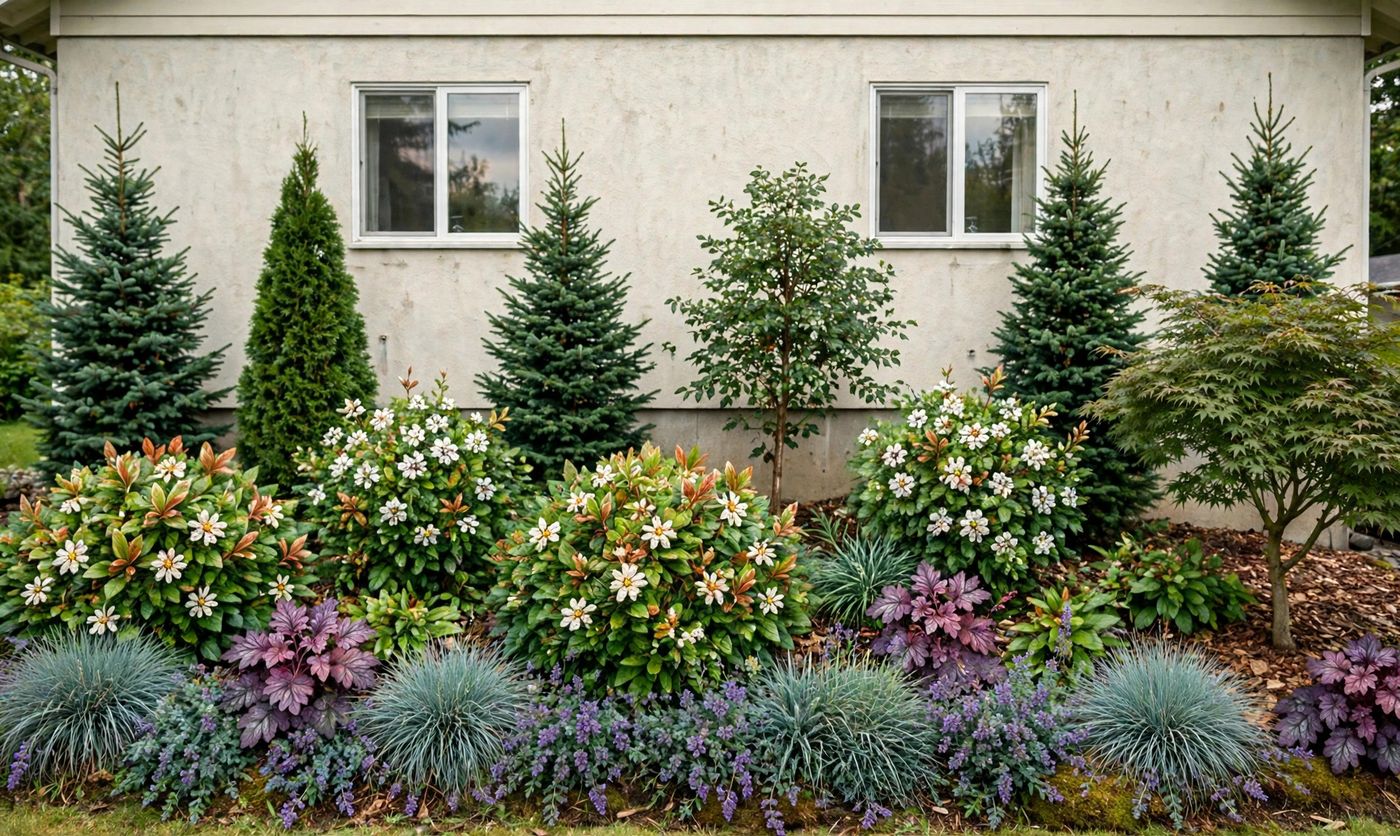
The formal garden is the tailored suit of landscape styles: clipped hedges, symmetrical bones, straight paths, and flowering shrubs planted inside a framework that looks intentional in every season. Its English roots show in the planting — roses, lavender edges, boxwood, hydrangeas — but the structure is pure geometry. It is the style that photographs like a country house and behaves like one too, with parterres, axes and a view that ends somewhere deliberate.
Formal does not have to mean a stately home. A small front yard gains instant presence from a low clipped hedge and a mirrored pair of plantings; a backyard gains rooms — hedge walls that turn one open lawn into a sequence of spaces. The pruning is real but modest: most of the structure is slow-growing and needs two clips a year.
Design moves that make it work
- Build the bones first: hedges, edging and the main axes before a single flower goes in.
- Use symmetry at the entries and focal points, then relax it deeper into the garden.
- Pair every flowering shrub with evergreen structure so winter keeps the geometry.
- Repeat one edging plant (lavender or boxwood) along every path for the tailored finish.
Plant combinations that work
Individual plants are easy; combinations are the design. Three proven groupings for this style — and how each one sits in the layout:
- The tailored edge — Boxwood, Lavender, Hydrangea. Clipped boxwood geometry, a lavender seam along the path, hydrangeas billowing inside the frame.
- The classic pairing — Prelude Japanese pieris, Dwarf English boxwood, Amethyst Mist coral bells. Pieris as the flowering wall, clipped boxwood holding the line, coral bells softening every edge.
- The mirrored entry — Amethyst bigleaf hydrangea, Dwarf sweet box, Variegated English boxwood. Matched hydrangea pairs flanking the door; sweet box and variegated boxwood keep the geometry through winter.
Signature plants
From the YardCanvas Pacific Northwest plant library — 36 plants carry the English / Formal Garden style:
- Bergenia cordifolia ‘Winterglow’ Bergenia cordifolia
- Pennisetum alopecuroides ‘Little Bunny’ Pennisetum alopecuroides
- Pennisetum alopecuroides ‘Moudry’ Pennisetum alopecuroides
- Carex morrowii ‘Ice Dance’ Carex morrowii
- Liriope muscari ‘Majestic’ Liriope muscari
- Pachysandra terminalis Pachysandra terminalis
- Phlox subulata ‘Emerald Blue’ Phlox subulata
- Pieris japonica ‘Prelude’ Pieris japonica
- Heuchera x ‘Amethyst Mist’ Heuchera x
- Escallonia ‘Newport Dwarf’ Escallonia
Browse the full Plant Library for sizes, sun and water needs.
In the Pacific Northwest
Classic English plants are at home in the PNW — roses, lavender, boxwood, hydrangea and rhododendron all thrive in zones 8b–9a. Boxwood blight is the local watch-out: keep air moving, avoid overhead watering, or substitute inkberry holly or Japanese holly for the same clipped look.
Maintenance, honestly
No garden is no-maintenance. Here is the real rhythm for this style, season by season:
- Spring: Clip hedges at the first flush, edge the beds, mulch inside the geometry.
- Summer: Second hedge clip in July; deadhead roses and hydrangeas.
- Fall: Tidy the structure, plant bulbs in the parterre, protect nothing — it's all hardy.
- Winter: One structural prune of deciduous shrubs; the evergreen bones carry the show.
Getting the layout right
Formal design lives and dies on measurement: mirrored beds must actually mirror. A YardCanvas plan is drawn to scale from your yard's real dimensions, so the symmetry survives installation.