
Blog · Garden style guides
Fall Color Plants
Fall color garden design for the Pacific Northwest.
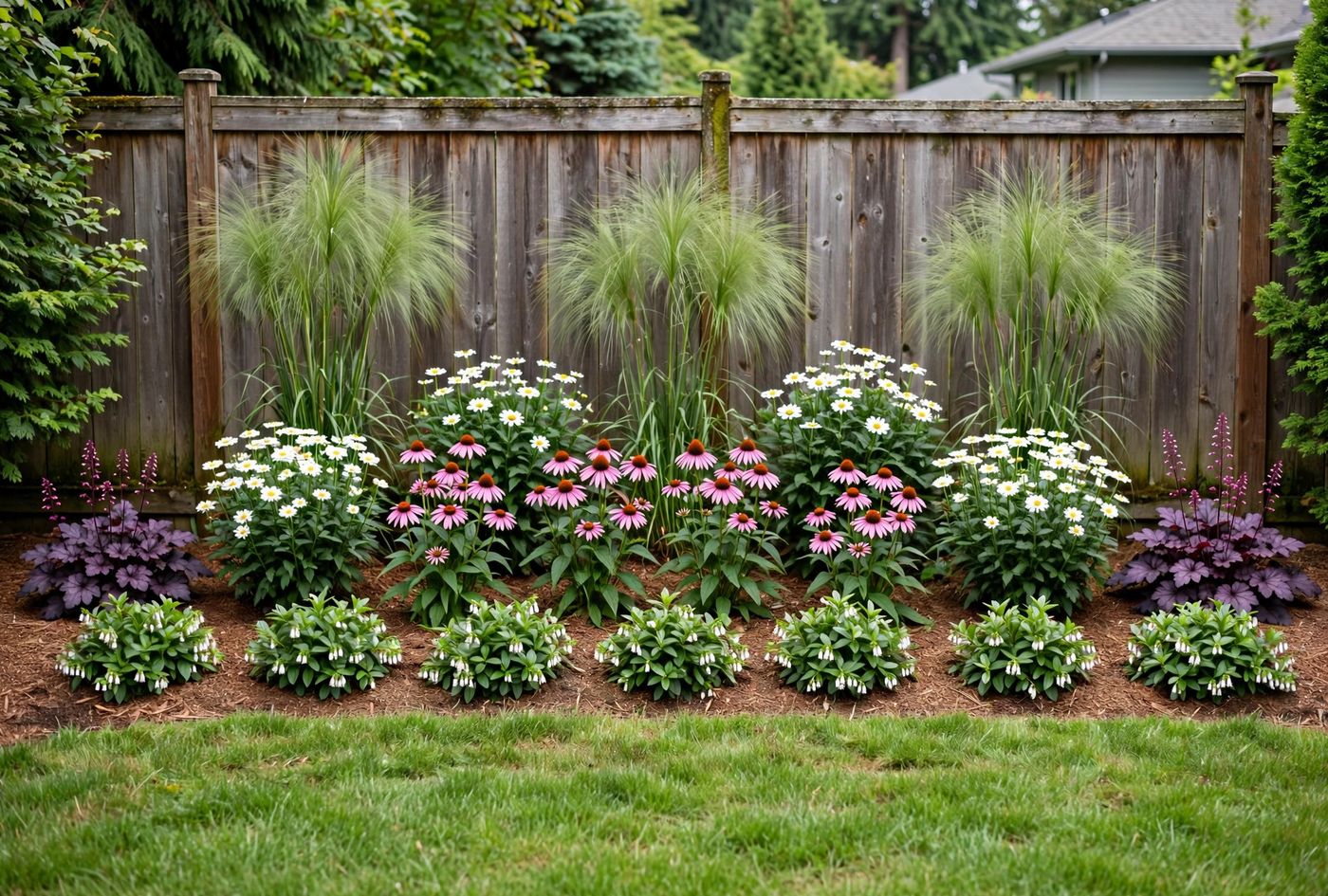
Fall color is the season the Pacific Northwest does in Technicolor — if you plant for it. This style builds the yard around autumn: Japanese and vine maples in red and gold, fall-flowering shrubs, ornamental grasses going tawny and luminous, berries ripening as the leaves turn. It is a garden composed backwards from October, with the spring and summer show as a supporting act.
The craft is in the backdrop. Fall color ignites against deep evergreen green, so this style pairs its stars with conifers and broadleaf evergreens the way a jeweler uses dark velvet. Sited where low afternoon sun shines through the leaves — a maple west of a window or patio — the effect doubles.
Design moves that make it work
- Plant at least one tree-sized performer: a Japanese or vine maple is the reliable PNW furnace.
- Back every fall star with evergreen; red against green is the whole trick.
- Add the supporting cast: fall berries (beautyberry, viburnum), late asters, and grasses for the golden layer.
- Site for backlight — afternoon sun through red maple leaves is the region's best free special effect.
Plant combinations that work
Individual plants are easy; combinations are the design. Three proven groupings for this style — and how each one sits in the layout:
- The October picture — Coral bark Japanese maple, Karl Foerster feather reed grass, Gulf Stream heavenly bamboo. Red maple over golden grass over red-flushing bamboo — the whole fall palette stacked in one view.
- The layered fire — Golden fullmoon maple, Bailey red osier dogwood, Creeping Oregon grape. Gold maple flames first; red dogwood stems and Oregon grape's mahogany winter leaves carry the color after it falls.
- The backlit border — Golden fullmoon maple, Gulf Stream heavenly bamboo, Winterglow bergenia. Gold maple lit by afternoon sun, bamboo flushing red beneath it, bergenia edging in bronze.
Signature plants
From the YardCanvas Pacific Northwest plant library — 22 plants carry the Fall Color Plants style:
- Carex testacea Carex testacea
- Mahonia repens Mahonia repens
- Arbutus unedo ‘Compacta’ Arbutus unedo
- Bergenia cordifolia ‘Winterglow’ Bergenia cordifolia
- Miscanthus sinensis ‘Little Kitten’ Miscanthus sinensis
- Calamagrostis acutiflora ‘Karl Foerster’ Calamagrostis acutiflora
- Microbiota decussata Microbiota decussata
- Acer palmatum ‘Sango-Kaku’ Acer palmatum
- Chamaecyparis pisifera ‘Mops’ Chamaecyparis pisifera
- Cornus stolonifera ‘Kelseyi’ Cornus stolonifera
Browse the full Plant Library for sizes, sun and water needs.
In the Pacific Northwest
Our falls are made for this: cool nights and mild days produce intense color, and maples color reliably in zones 8b–9a. Coral bark maple adds a second act — after the leaves drop, the red bark carries winter. Avoid burning bush (invasive in our region); the palette above gets the same fire legally and better.
Maintenance, honestly
No garden is no-maintenance. Here is the real rhythm for this style, season by season:
- Spring: Mulch maples, prune only dead wood while the shape is bare.
- Summer: Water young maples deeply in heat — fall color is better on unstressed trees.
- Fall: Your only task: be home in October. Rake leaves off lawns, leave them in beds.
- Winter: Enjoy the second show — coral bark and red dogwood stems carry the cold months.
Getting the layout right
Because fall is a view as much as a season, YardCanvas sites the color trees on the plan relative to your windows and patio — the October picture is framed before the tree is bought.