
Blog · Garden style guides
Mediterranean Garden
Mediterranean garden design for dry PNW summers.
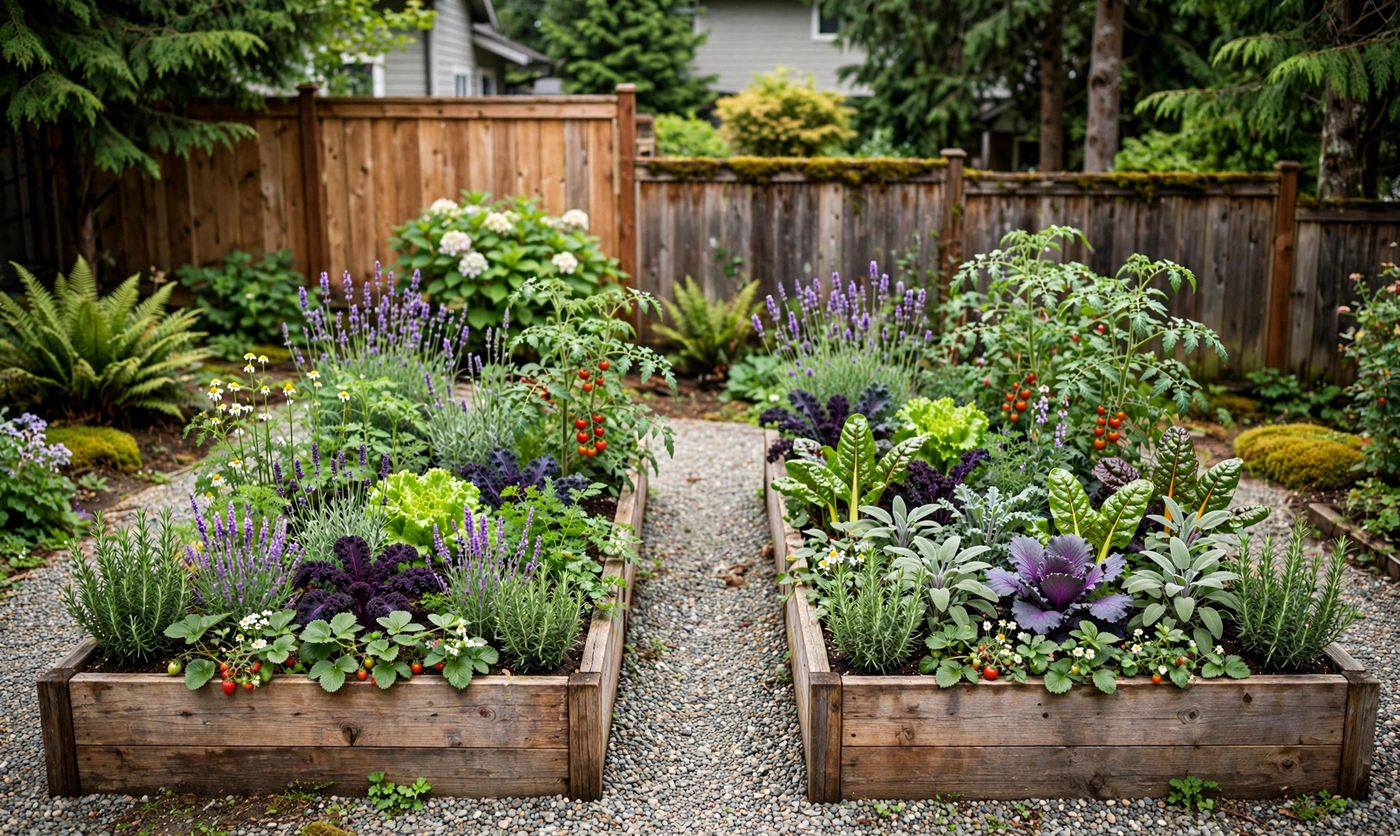
The Mediterranean garden is the xeriscape's more romantic cousin: lavender hedges and rosemary, silver artemisia and lamb's ear, rock rose and salvia, olive-toned foliage over warm gravel, maybe a fig or a grape finding the sun against a wall. It smells incredible — half the palette is herbs — and it is built for exactly the weather our summers deliver: hot, bright and dry for months at a stretch.
Where xeriscape is a water strategy, this is a place: an evocation of Provence and the Italian hills translated to the Northwest. The translation works because the plant palette overlaps almost perfectly with our dry-summer performers, and our mild winters (in the right spot) keep even rosemary and lavender hedges thriving for decades.
Design moves that make it work
- Site it in your sunniest, best-drained ground — against a south or west wall is the classic move.
- Plant the herb spine: lavender as low hedging, rosemary as shrubs, thyme and oregano as the groundcover.
- Use warm gravel and stone as the floor; the reflected heat is part of the recipe, not decoration.
- Clip lavender after bloom and rosemary lightly in spring to keep the mounds dense and woody-free.
Plant combinations that work
Individual plants are easy; combinations are the design. Three proven groupings for this style — and how each one sits in the layout:
- The herb spine — Hidcote English lavender, Irene rosemary, Elfin thyme. Lavender hedging, rosemary as the shrub layer, thyme as the living grout — the Mediterranean garden in one run.
- The silver garden — Lavender, Lamb's ear, Cliff stonecrop. Silver and blue foliage over warm gravel, stonecrop sealing every sunny edge.
- The warm-wall bed — White rock rose, Hidcote English lavender, Apple Blossom yarrow. Rock rose and lavender drinking up wall heat, yarrow feeding pollinators from June to September.
Signature plants
From the YardCanvas Pacific Northwest plant library — 19 plants carry the Mediterranean Garden style:
- Arbutus unedo ‘Compacta’ Arbutus unedo
- Eryngium alpinum Eryngium alpinum
- Euphorbia characias ‘Humpty Dumpty’ Euphorbia characias
- Cistus x hybridus Cistus x hybridus
- Lavandula angustifolia ‘Hidcote' Lavandula angustifolia
- Lavandula angustifolia ‘Hidcote’ Lavandula angustifolia
- Lavandula angustifolia ‘Nana' Lavandula angustifolia
- Sedum cauticola ‘Lidakense’ Sedum cauticola
- Sedum spurium ‘Raspberry Red’ Sedum spurium
- Thymus serpyllum ‘Elfin’ Thymus serpyllum
Browse the full Plant Library for sizes, sun and water needs.
In the Pacific Northwest
In zones 8b–9a lavender is essentially a native in behavior, and rosemary 'Arp' survives most winters against a wall. The winter-wet rule governs everything: gravel mulch, raised crowns, no rich soggy soil. Figs (Desert King) ripen here reliably and belong in every PNW Mediterranean plan with room.
Maintenance, honestly
No garden is no-maintenance. Here is the real rhythm for this style, season by season:
- Spring: Clip lavender hedges into mounds after the last frost; prune rosemary lightly.
- Summer: Harvest herbs freely; water nothing established — lean and dry keeps the flavor.
- Fall: Plant new Mediterranean beds now for winter roots; stop all feeding.
- Winter: Brush wet leaves off crowns and check drainage — winter wet is the only real enemy.
Getting the layout right
YardCanvas keeps the herb spine edible and the plan honest about sun: the Mediterranean bed is placed where your yard's real sun hours support it, not where it merely looks good on paper.