
Blog · Garden style guides
Summer / Fall Blooming Plants
Summer and fall blooming garden design.
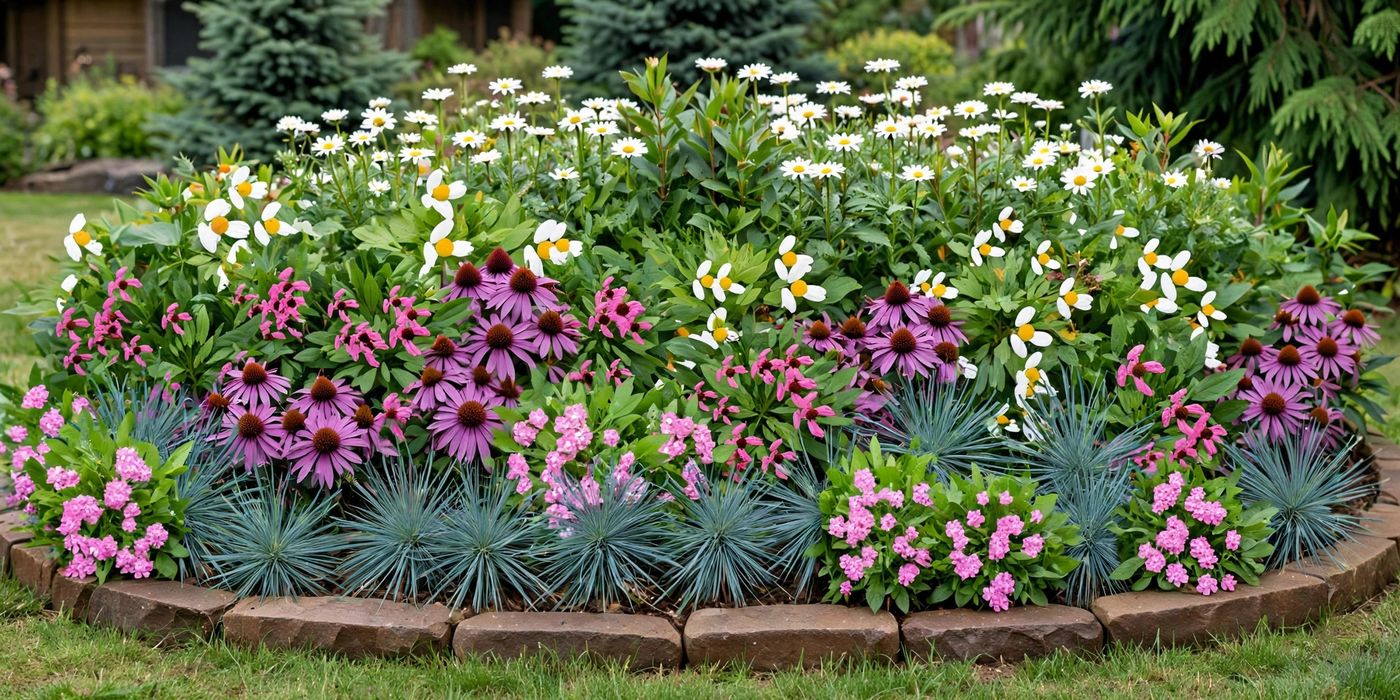
Most gardens spend their budget in April and are exhausted by July. This style flips the calendar: it is designed to peak from midsummer into fall, when you are actually outside using the yard. Hydrangeas carry June through September, coneflower and black-eyed Susan run the high-summer shift, ornamental grasses plume up in August, and asters, sedum and Japanese anemone close the season in a finale that feeds bees when little else is blooming.
It is also the forgiving season to garden in here. Our dry summers mean fewer fungal problems than humid climates, and the long, mild fall — often frost-free into November — stretches the show for months.
Design moves that make it work
- Anchor with hydrangeas: mopheads for shade edges, panicle types for sun — they are the longest-blooming shrubs we have.
- Run perennials in sequence: daylilies and coneflower in July, black-eyed Susan in August, asters and sedum September on.
- Let grasses and seed heads stand — fall texture and winter bird food in one move.
- Cut the spring clutter: this bed can start quiet (evergreen bones) and build to its crescendo.
Plant combinations that work
Individual plants are easy; combinations are the design. Three proven groupings for this style — and how each one sits in the layout:
- The long-season engine — Hidcote English lavender, Purple coneflower, Goldsturm black-eyed Susan. Lavender opens in June, coneflower takes July, black-eyed Susan runs August to frost.
- The fall finale — Karl Foerster feather reed grass, Firefly Scotch heather, Little Bunny fountain grass. Feather reed grass plumes glow in September light, heather colors the front, fountain grass softens the base.
- The grass-and-bloom drift — Karl Foerster feather reed grass, Purple coneflower, Hidcote English lavender. Lavender in June, coneflower and grass carrying the bed from July onward.
Signature plants
From the YardCanvas Pacific Northwest plant library — 31 plants carry the Summer / Fall Blooming Plants style:
- Carex testacea Carex testacea
- Pennisetum alopecuroides ‘Little Bunny’ Pennisetum alopecuroides
- Pennisetum alopecuroides ‘Moudry’ Pennisetum alopecuroides
- Liriope muscari ‘Majestic’ Liriope muscari
- Miscanthus sinensis ‘Little Kitten’ Miscanthus sinensis
- Phlox subulata ‘Emerald Blue’ Phlox subulata
- Calamagrostis acutiflora ‘Karl Foerster’ Calamagrostis acutiflora
- Helictotrichon sempervirens ‘Saphirspruel’ Helictotrichon sempervirens
- Calluna vulgaris ‘Firefly’ Calluna vulgaris
- Choisya ternata Choisya ternata
Browse the full Plant Library for sizes, sun and water needs.
In the Pacific Northwest
In zones 8b–9a, panicle hydrangeas are bulletproof and bloom on new wood, so a hard winter never cancels the show. Japanese anemone can spread — give it room or a big pot sunk in the bed. Water perennials deeply in August heat; established clumps coast.
Maintenance, honestly
No garden is no-maintenance. Here is the real rhythm for this style, season by season:
- Spring: Cut back last year's stems, mulch, stake nothing — this palette stands on its own.
- Summer: Deadhead daylilies and coneflowers if you want rebloom; water deeply in August heat.
- Fall: Leave sedum and grass seed heads standing for birds and winter texture.
- Winter: A single late-winter cutback clears the stage for spring.
Getting the layout right
YardCanvas sequences the bed on the plan by bloom month, so the color moves across the bed instead of firing all at once — a small thing that makes a designed garden look designed.