
Blog · Garden style guides
Winter / Spring Blooming Plants
Winter and spring blooming garden design.
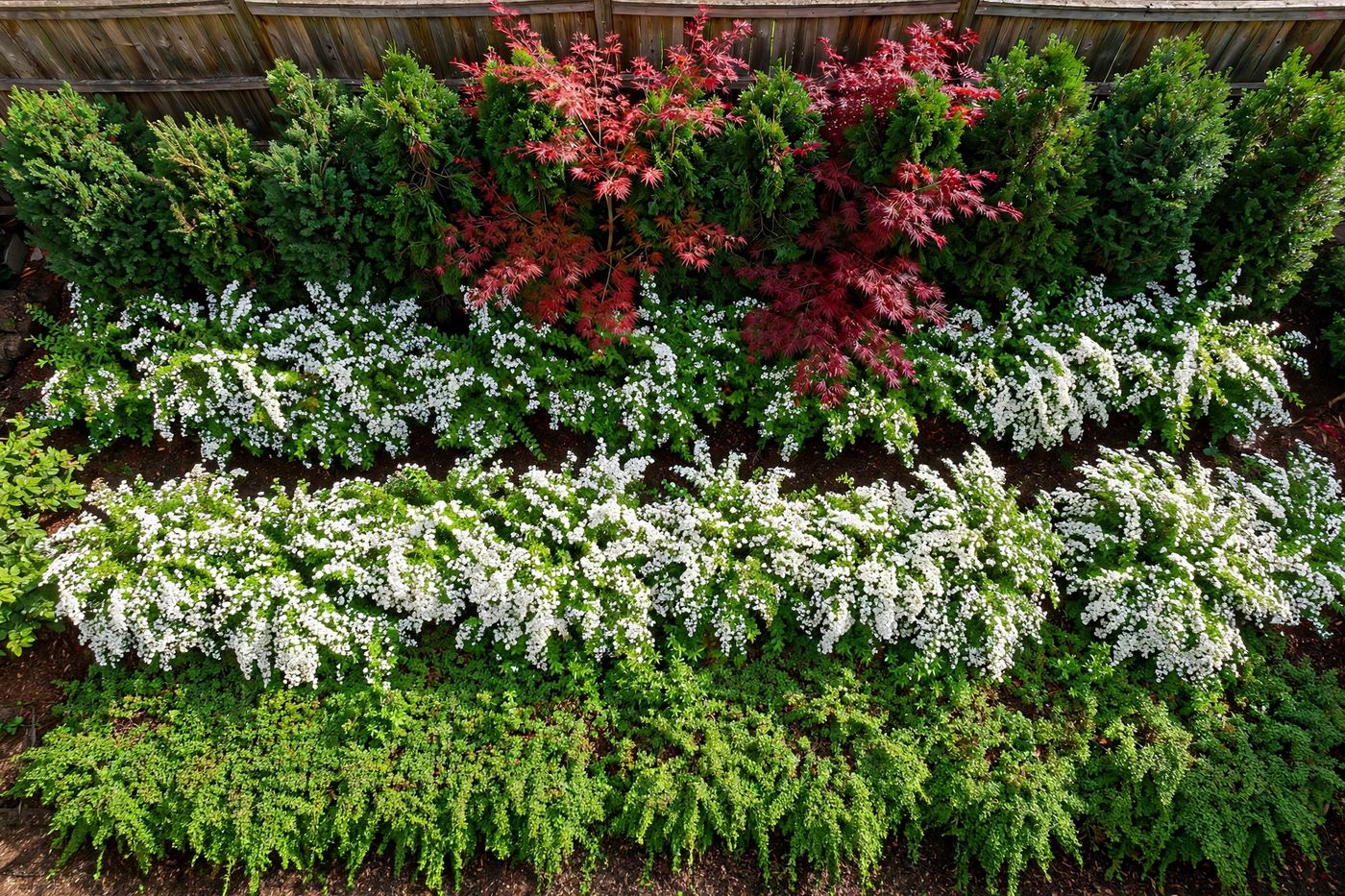
This is the style for people who live in their gardens in February. While most yards are bare, a winter-spring garden is performing: camellias opening in the cold, witch hazel spidery and fragrant in January, hellebores nodding under the shrubs, sarcococca filling the entry with perfume you smell before you see a single flower. Then it hands off seamlessly — pieris, rhododendron, azalea, lilac — into the big spring show.
In the Pacific Northwest this is not a stunt; it is our home advantage. Our winters are mild enough that a whole class of plants blooms straight through them, and designing for the quiet seasons means the garden gives you something in the months you need it most.
Design moves that make it work
- Place winter bloomers where winter-you will see them: outside windows, along the entry walk, by the driveway.
- Stack the relay: hellebores and witch hazel (Dec–Feb), camellia and pieris (Feb–Apr), rhododendron and lilac (Apr–May).
- Use evergreen foliage as the stage — winter flowers read double against deep green.
- Add spring bulbs under everything; they cost little and multiply the effect.
Plant combinations that work
Individual plants are easy; combinations are the design. Three proven groupings for this style — and how each one sits in the layout:
- The winter relay — Camellia, Japanese pieris, Lenten rose. Hellebores in December, camellia from January, pieris bells in March — no gap in the cold months.
- The fragrant door — Dwarf sweet box, Winter daphne, Kinnikinnick. Sweet box and daphne perfume the entry path in late winter, kinnikinnick evergreen underfoot.
- The spring handoff — Rhododendron, Camellia, Japanese pieris. Camellia and pieris open the show, rhododendron closes it in May — one bed, five months of bloom.
Signature plants
From the YardCanvas Pacific Northwest plant library — 37 plants carry the Winter / Spring Blooming Plants style:
- Arctostaphylos uva-ursi Arctostaphylos uva-ursi
- Carex testacea Carex testacea
- Mahonia repens Mahonia repens
- Arbutus unedo ‘Compacta’ Arbutus unedo
- Mahonia nervosa Mahonia nervosa
- Bergenia cordifolia ‘Winterglow’ Bergenia cordifolia
- Carex morrowii ‘Ice Dance’ Carex morrowii
- Pieris japonica ‘Prelude’ Pieris japonica
- Calamagrostis acutiflora ‘Karl Foerster’ Calamagrostis acutiflora
- Heuchera x ‘Amethyst Mist’ Heuchera x
Browse the full Plant Library for sizes, sun and water needs.
In the Pacific Northwest
Zones 8b–9a grow camellias outdoors that colder regions keep in greenhouses, and hellebores are essentially weeds-with-beauty here. The one care point: camellia buds can brown in a hard freeze or early-morning sun after frost — a north or east wall keeps them perfect.
Maintenance, honestly
No garden is no-maintenance. Here is the real rhythm for this style, season by season:
- Spring: Prune camellia and pieris right after flowering; feed acid-lovers.
- Summer: Mulch and water in drought — next winter's buds form on this summer's growth.
- Fall: Hands off: the flower buds for winter are already set. Plant bulbs beneath.
- Winter: The show is on — your only job is to walk past it daily.
Getting the layout right
The plan for this style is a calendar as much as a map: YardCanvas orders the planting so each month has a performer near the house, and the quiet-season view from your windows is designed first.