
Home · Garden design by city · Bellevue
Garden design in Bellevue
Bellevue yards are bigger, leafier and more on display — to neighbors, to HOAs, and to February. Design here is about structure: evergreen bones, real privacy, and a front yard that holds up in the grey months.
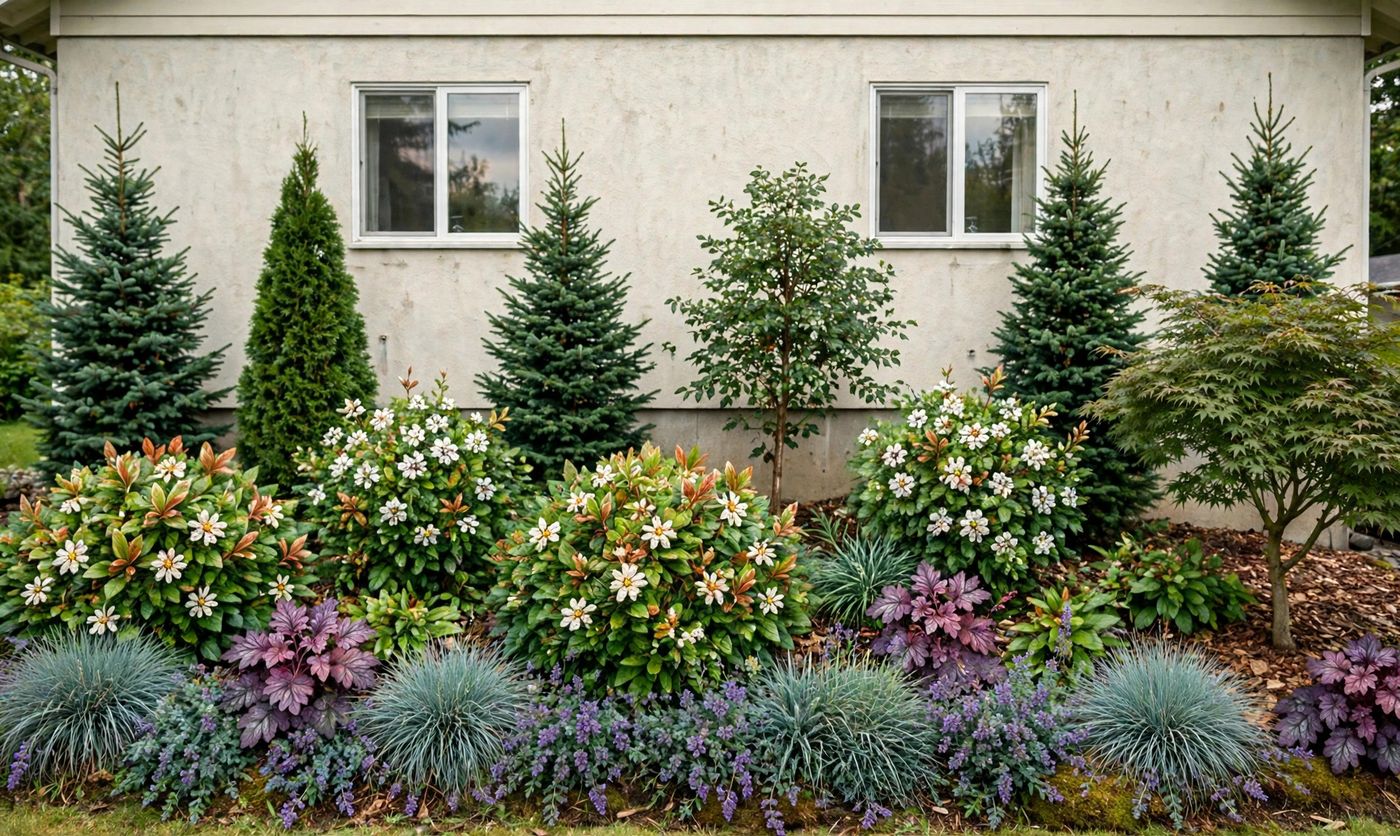
Gardening in Bellevue: the local facts
Bellevue straddles the USDA 8b/9a line. The lakeside neighborhoods are as mild as Seattle, but the ground rising east toward Cougar Mountain and the Sammamish plateau runs a touch colder — and noticeably wetter, as the foothill edge squeezes extra rain out of systems moving in off the Sound. Summers stay regionally dry, so irrigation planning matters; winters on the higher ground simply mean choosing from the hardier half of the palette.
Lots are Bellevue's luxury: a third to a half acre is common in the older neighborhoods, often with mature firs, cedars and bigleaf maples already standing. The soil is glacial till and clay, frequently compacted by construction, and many properties slope at least a little. The canvas is a suburban one — a street-facing front yard that carries the home's curb appeal year-round, close side neighbors, and a back garden that is either nicely screened or fully exposed, depending on what was planted behind the fence.
Two more Bellevue realities shape the planting list. Deer work the wooded edges — around Bridle Trails, Cougar Mountain and the greenbelt lots they browse roses, hostas and young fruit trees, so designs there lean on what deer pass over: pieris, sarcococca, ornamental grasses, lavender and most conifers. And the higher neighborhoods sit close enough to the Cascade foothills to catch heavier wet snow some winters — broadleaf evergreens go in where a roofline or canopy sheds part of the load, and shrubs are chosen for branches that flex rather than split.
Design challenges in Bellevue
- Privacy without the arborvitae wall. The Eastside default screen is a solid green wall that reads as one from every window. A designed screen layers instead — a small tree, flowering shrubs, then evergreen mounds — so the view from inside is a garden, the privacy is just as complete, and every plant is chosen at its mature size so nothing outgrows its space in five years.
- The February front yard. Bellevue front yards are on show twelve months a year, and a deciduous-only planting is bare sticks for five of them. Holding roughly two-thirds evergreen structure — pieris, camellia, conifers, winter heather — keeps the entry composed through the grey season, when you actually look at it most.
- Dry shade under mature evergreens. Those big existing firs and cedars are an asset with a thirst: their roots take first drink of every rainfall. Bellevue designs route thirstier planting out from under the canopy and use dry-shade specialists — epimedium, sarcococca, Russian cypress — in the root zone where almost nothing else thrives.
Styles that fit Bellevue
Of the nineteen YardCanvas style guides, these three earn their keep in Bellevue more often than any others:
- Evergreen Garden — The Bellevue backbone — layered greens that look finished in every month and keep an HOA happy by design.
- English / Formal Garden — Clipped structure and a composed entry suit Bellevue's traditional architecture and generous front yards.
- Winter / Spring Blooming Plants — Camellia, pieris and hellebores carry the long grey season right outside the windows you live behind.
Ideas that work in Bellevue
Foundation Planting
Evergreen anchors and a flowering layer that upgrade the whole street view.
See it on the Ideas page →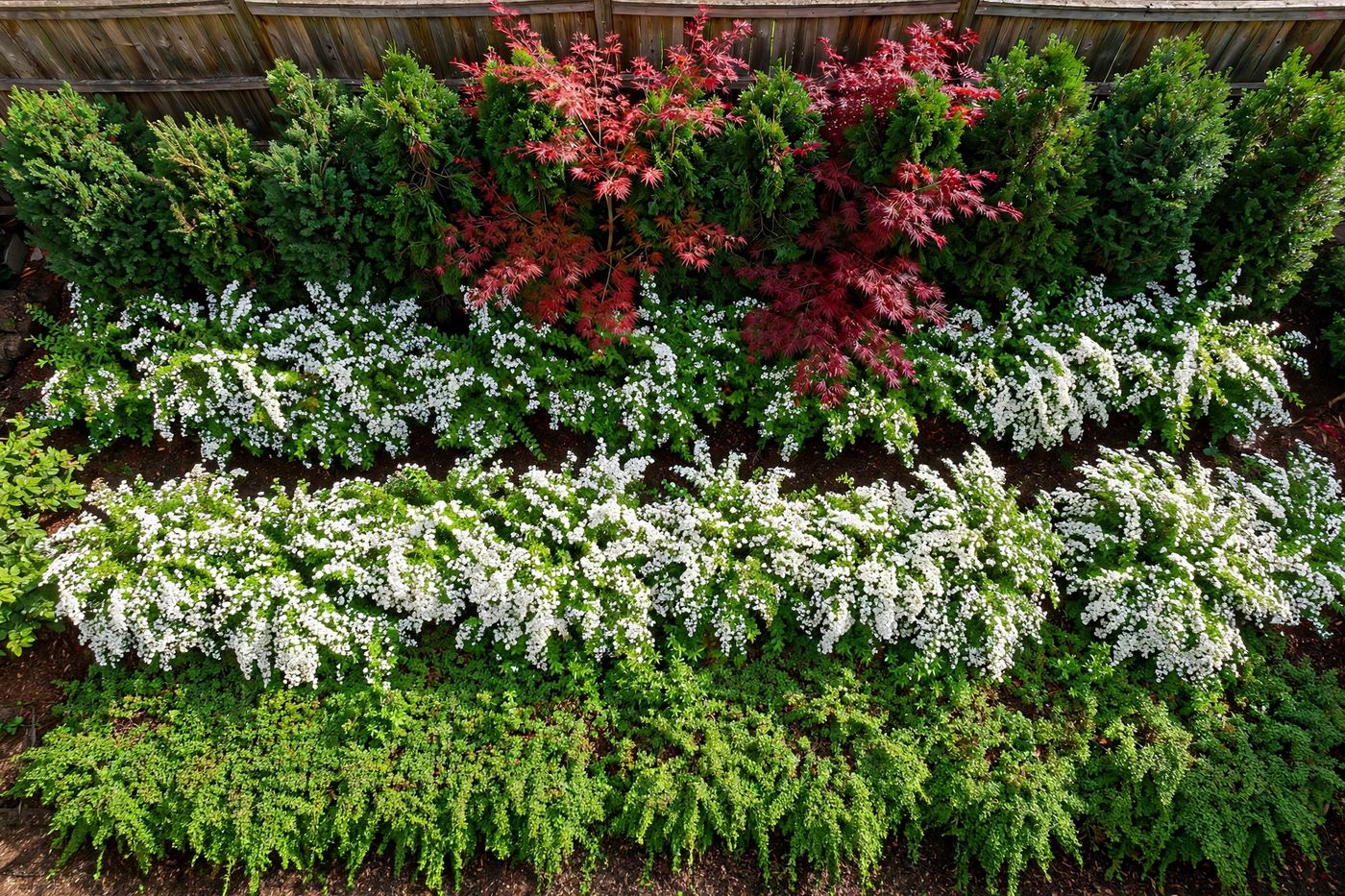
Fence Line Shrub Border
A layered privacy border that reads as a garden from the inside.
See it on the Ideas page →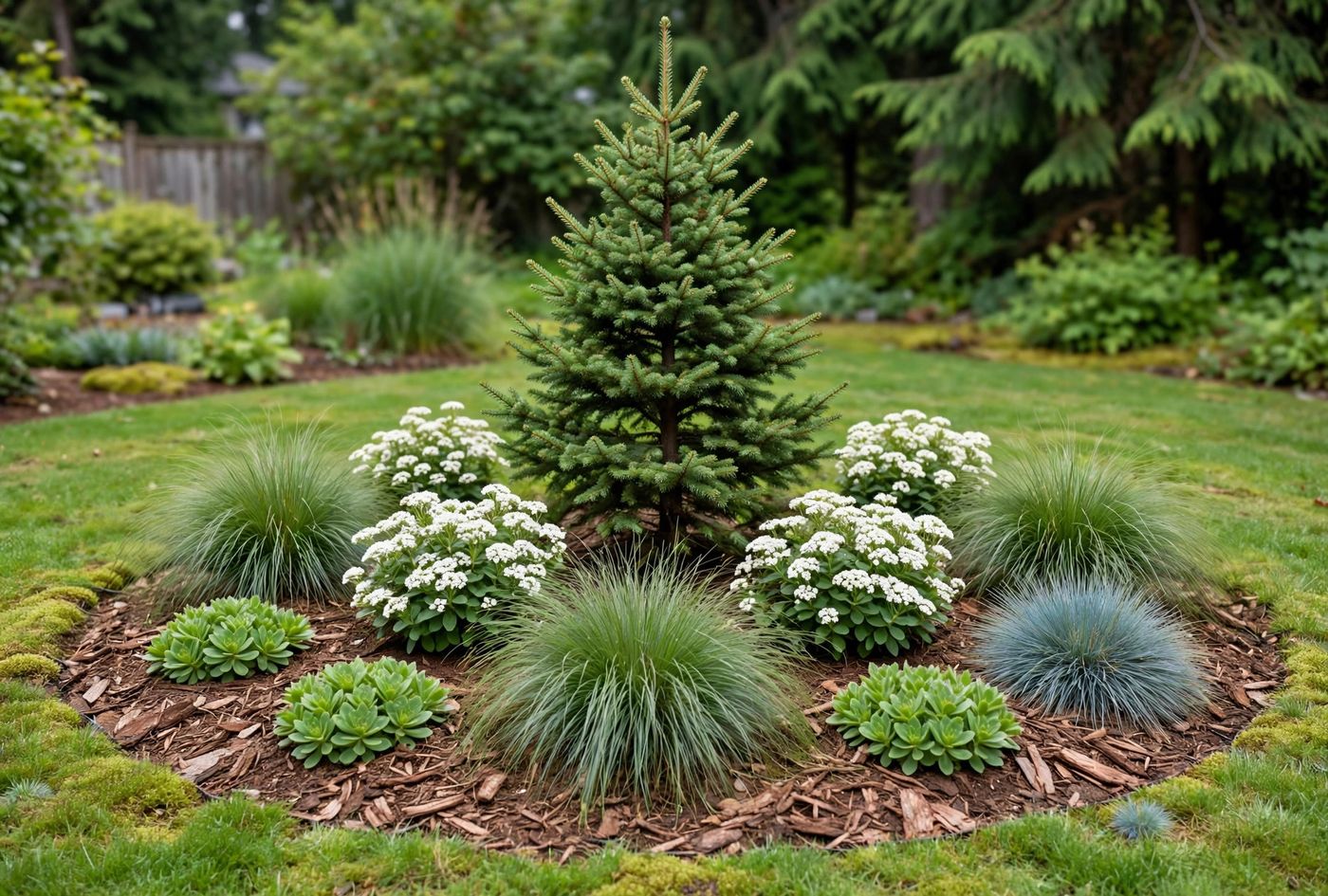
Evergreen Circle Bed
A round feature bed that stays green through February.
See it on the Ideas page →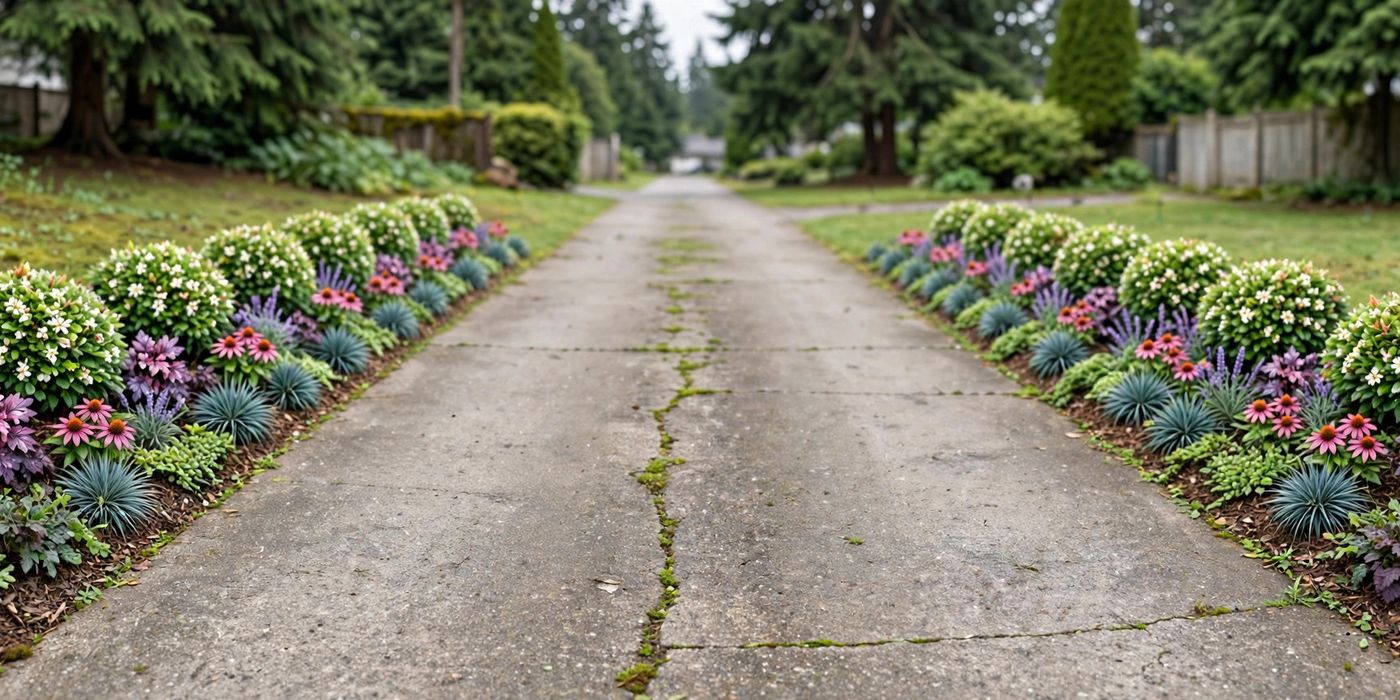
Driveway Border
Heat-tolerant planting that dresses up the drive without crowding car doors.
See it on the Ideas page →