
Home · Garden design by city · Kirkland
Garden design in Kirkland
Kirkland is the cottage city of the Eastside — walkable, leafy, and tilted toward the lake. Gardens here lean charming, layered and rain-smart, in that order.
Gardening in Kirkland: the local facts
Kirkland sits squarely in USDA zone 8b, moderated by Lake Washington: the water trims both the coldest winter nights and the hottest summer afternoons, and the shoreline neighborhoods — Market, Houghton, the Juanita bayside — are the gentlest microclimate on the Eastside. Rain runs about 36 inches a year in the regional pattern of wet winters and dry summers, and the breeze off the lake is a genuine design factor for anything tall, tender or newly planted.
The land tilts. Much of Kirkland slopes — gently across Finn Hill and Juanita, seriously on the streets that step down to the waterfront — and sloped glacial till sheds winter water fast, downhill toward whatever is at the bottom. Lots are smaller than Bellevue's, many under a quarter acre, in neighborhoods with a century of garden character: old roses, mature maples, hedged cottages. Newer building around Totem Lake and in Kingsgate trades that character for compact lots where every square foot has to earn its place.
Kirkland also gardens under a tree code: the city protects its significant trees, and removing or heavily pruning one on a developed lot can require a permit — so a sound design treats the existing canopy as a fixed feature, never an obstacle. Practically, that means laying beds out around the maples and firs already standing, choosing understory plants that tolerate their root competition, and letting the canopy itself be the garden's ceiling. Many Kirkland gardens start half-built this way: the bones are standing, and the design fills in the layers beneath — shrubs that flower in the light gaps, ferns and groundcover that knit the floor — instead of starting from a blank lot.
Design challenges in Kirkland
- Slopes that send the water downhill. On a Kirkland lot, design starts with drainage: contour planting that slows sheet flow, a rain garden at the low corner to catch it, and steps or a path laid out so winter water never gets a straight run at the foundation.
- Lake wind and glare. Waterfront and near-lake yards take a breeze that flattens loose, leggy planting and stresses new trees. Low layered masses, wind-firm shrubs and ornamental grasses that are meant to move handle the exposure better than tall, brittle structure.
- Small lots with cottage ambitions. The cottage look is abundance, and abundance needs editing at Kirkland scale: drifts scaled down, vertical accents instead of wide-spreading shrubs, and a front yard that carries the show because the back is mostly patio.
Styles that fit Kirkland
Of the nineteen YardCanvas style guides, these three earn their keep in Kirkland more often than any others:
- Cottage Garden — Kirkland's native language — drifts of lavender, roses and coneflower at front-yard scale.
- Rain Garden — Sloped lots plus 36 inches of rain: a planted basin at the low corner is the Kirkland fix.
- All Seasons Plantings — In a walk-to-everything city the front yard performs for the street twelve months a year — plan it by the calendar.
Ideas that work in Kirkland
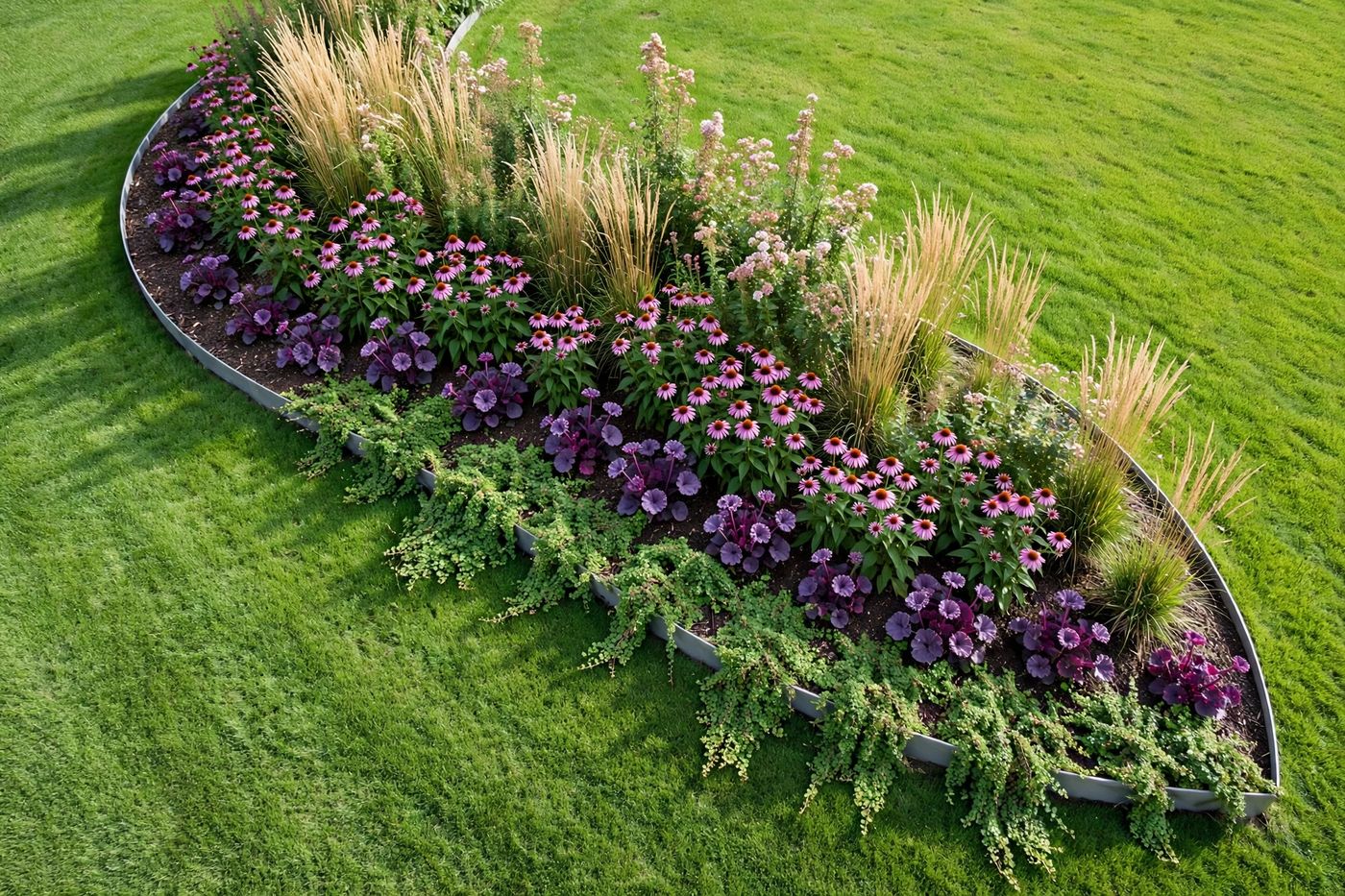
Curved Lawn Border
A sweeping curve that softens a small Kirkland lawn and gives the mower a clean line.
See it on the Ideas page →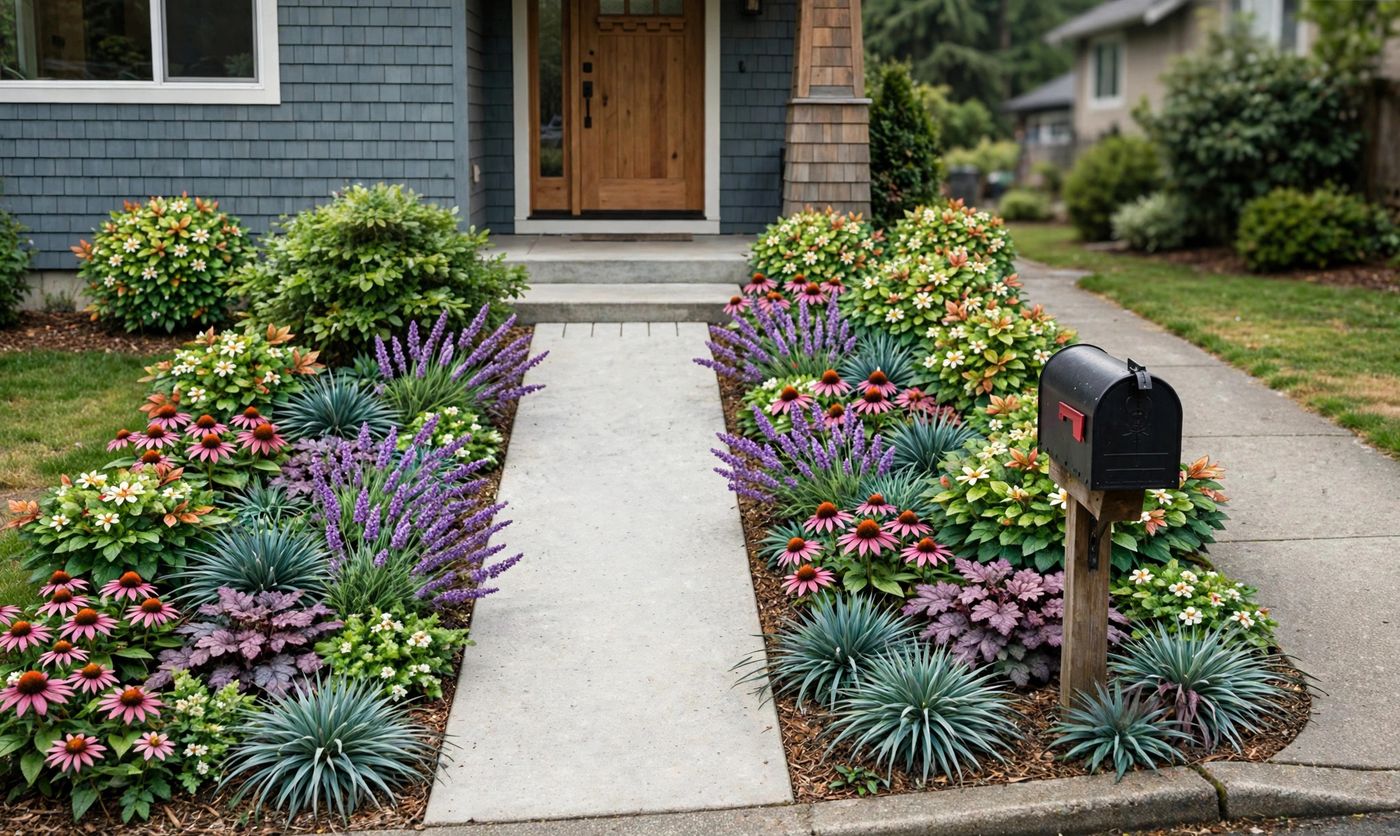
Mailbox & Entry Garden
Curb-appeal color where the sidewalk meets the yard.
See it on the Ideas page →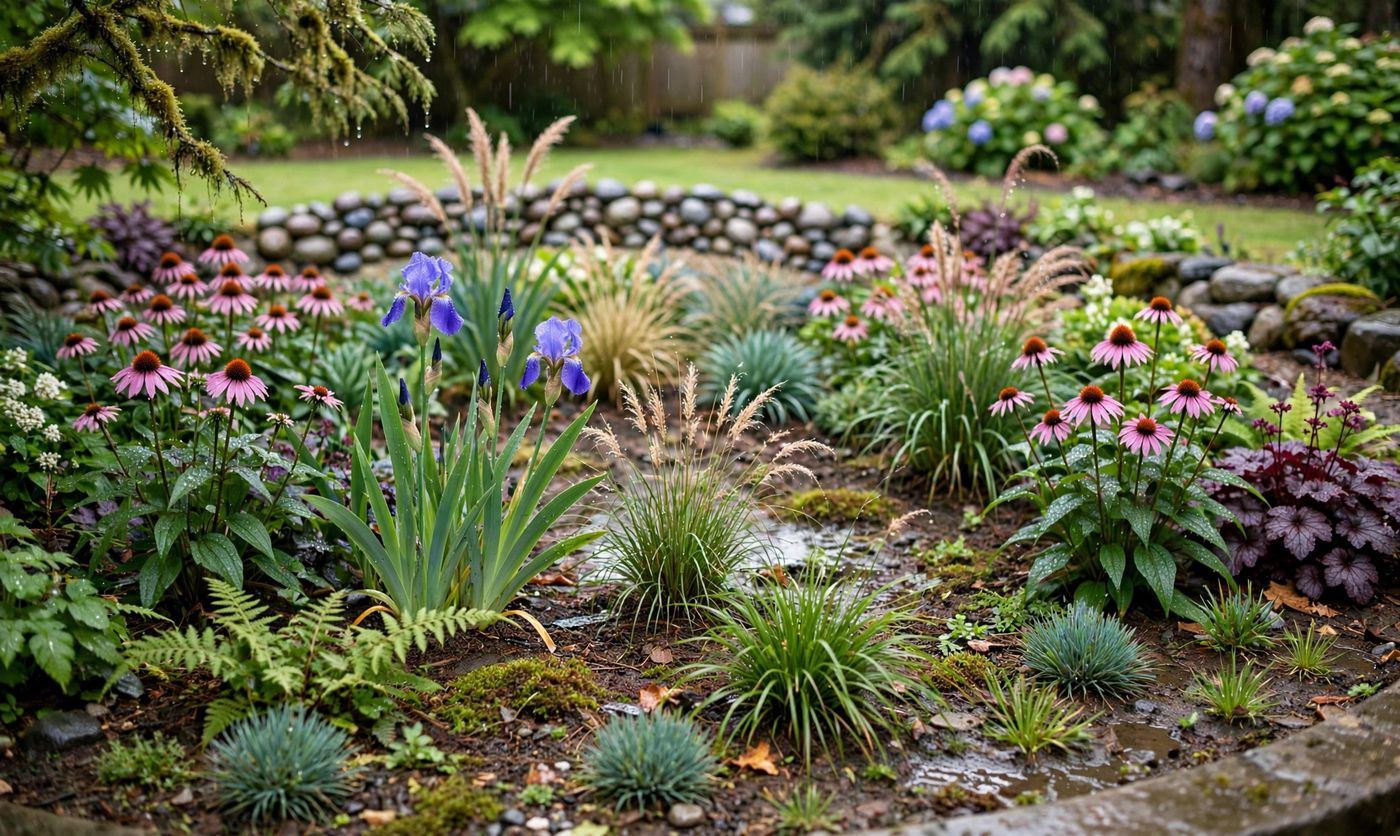
Rain Garden
A shallow planted basin that catches what the slope sends down.
See it on the Ideas page →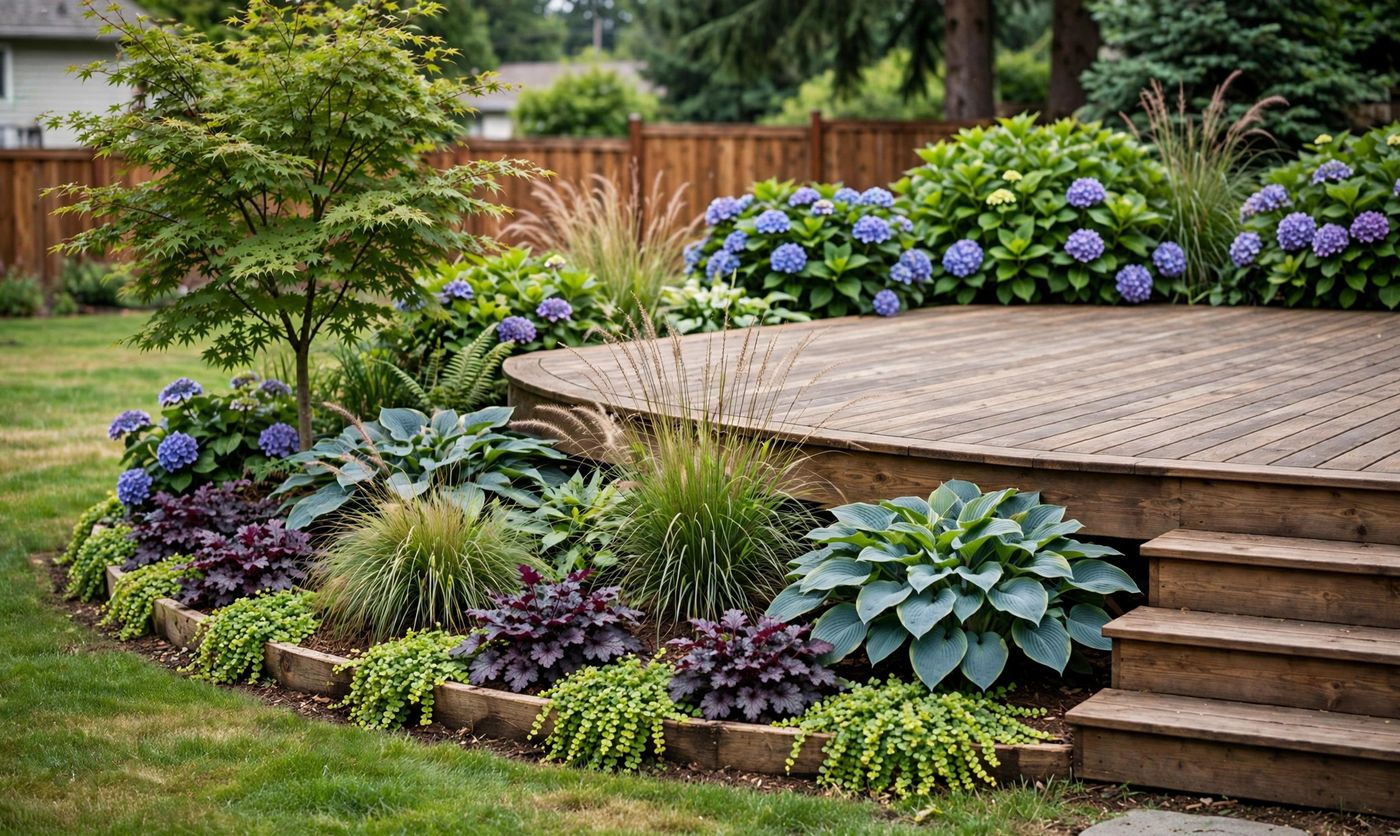
Deck Edge Planting
Soft planting that turns a deck edge into a garden border.
See it on the Ideas page →